Every month, around 9,900 people in the UK type “funeral directors near me” into Google. They are not browsing. They are grieving, under time pressure, and looking for a business they can trust, right now. The question is not whether families search online for funeral directors. They do. The question is whether your business is visible when they search, with content that matches the words they use.
Keyword research for funeral directors is how you discover those words. It is the bridge between what families type and what your website says. Without it, even a well-designed site can miss the queries that matter at each stage of bereavement, from the first practical questions after a death to the moment someone compares costs and picks up the phone.
This guide gives you the data and the method. You will see the highest-volume UK funeral keywords for 2026, how search intent changes your page plan, why long-tail and conversational phrases matter for AI-led search, and a step-by-step process you can run with free tools. You will also get a model keyword map you can adapt for your own firm.
Why does keyword research matter for independent funeral directors?
Keyword research is the process of identifying the exact words and phrases people type into search engines. For funeral directors, it is the most direct intelligence available about what families need in the hours and days after a bereavement. Without it, a funeral home website is guesswork. It tells you which services, prices, and guidance people search for, and the language they use when they are under stress.
Most families now begin online. They search before they ask a friend, before they remember a name from a previous funeral, and often before they have the emotional bandwidth for a long phone call. If your pages do not reflect the phrases they use, you rely on luck or brand memory alone. That is a fragile position for an independent firm competing against national brands with large marketing budgets.
Keyword research also levels practical planning. An independent funeral director who structures content around real queries can earn measurable visibility for specific services, from direct cremation to humanist ceremonies, without copying generic chain wording. Trade association memberships, NAFD or SAIF credentials, and local reputation still matter enormously on the page, but they need to sit alongside language that matches search demand.
This is not about tricking search engines. It is about answering questions people already ask. When you align your services, pricing transparency, and guidance content with those questions, you build trust and relevance at the same time. Keyword strategy should still connect to maps, citations, and your Google Business Profile, but those layers need their own checklist once your page map is clear.
What do families actually search for when someone dies?
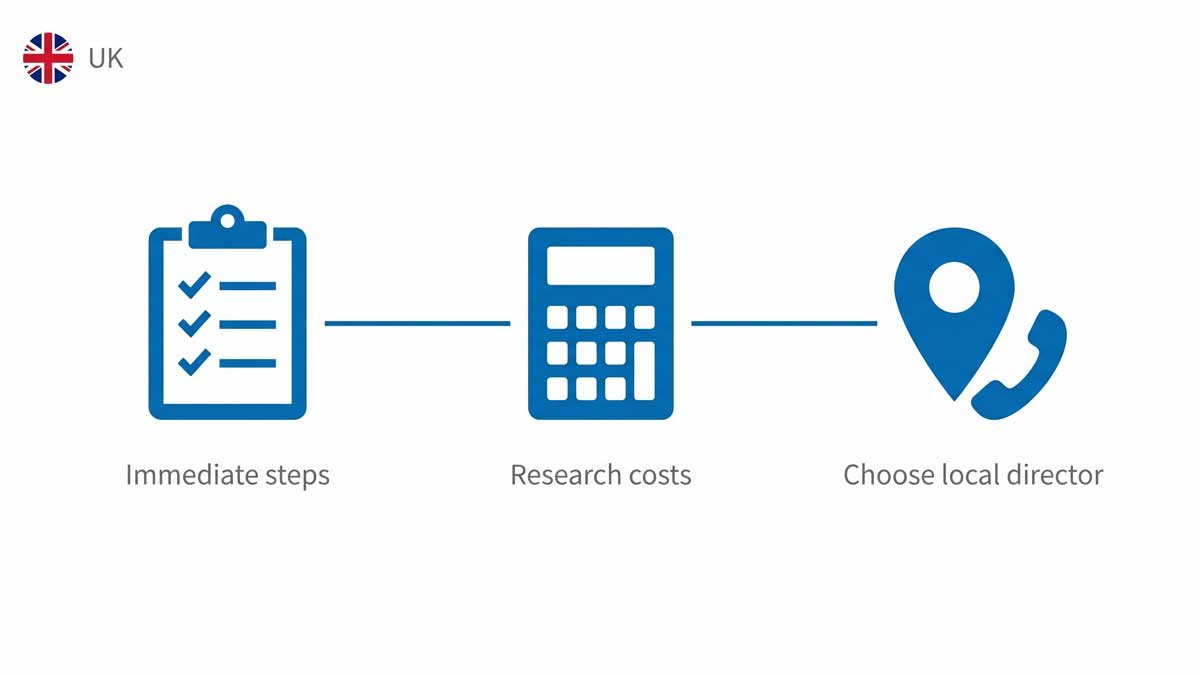
When someone dies, the family’s Google search journey typically begins with practical questions, such as what to do when someone dies and how to register a death, before moving to service and cost research, then to decision queries such as funeral directors near me. Each stage uses a different keyword cluster, which means funeral directors have more than one moment to be helpful online.
In the first hours and days, shock and administration dominate. Searches focus on procedure and certainty. What to do when someone dies attracts 5,400 UK monthly searches, register a death attracts 5,400, and how long does it take to arrange a funeral attracts 480 (DataForSEO [1], September 2026). Content that explains the sequence calmly, without jargon, meets families at their most disoriented point.
Next, families compare cost and format. How much does a funeral cost attracts 2,400 UK monthly searches with a keyword difficulty score of only 7. Average funeral cost attracts 1,300. Direct cremation attracts 5,400, which reflects both curiosity and a structural shift toward simpler cremation-led choices (DataForSEO, September 2026). This is the stage where transparent pricing pages and plain-English explainers win attention from comparison sites.
Finally, they choose who to call. Funeral directors near me attracts around 9,900 UK monthly searches, cremation near me attracts around 8,100, funeral services near me attracts 720, and direct cremation near me attracts 1,000 (DataForSEO, September 2026). If your site only targets this last stage, you compete in the noisiest part of the journey and abandon earlier stages to others.
Publishing trustworthy guidance for stage one does not replace transactional service pages. It complements them. Families who read your practical advice remember the name when they move to stage three.
Three stages of family search behaviour (UK volumes)
| Stage | What the family needs | Example keywords (UK monthly volume) |
|---|---|---|
| Immediate practical steps | Procedures, timelines, first actions | “what to do when someone dies” (5,400), “register a death” (5,400), “how long does it take to arrange a funeral” (480) |
| Research and comparison | Costs, formats, options | “how much does a funeral cost” (2,400), “average funeral cost” (1,300), “direct cremation” (5,400) |
| Decision and contact | Local availability, specific services | “funeral directors near me” (9,900), “cremation near me” (8,100), “direct cremation near me” (1,000) |
What are the most searched funeral keywords in the UK in 2026?
Funeral director and funeral directors near me are the most searched funeral service phrases in the UK, at 12,100 and around 9,900 searches a month. The top UK funeral keywords collectively generate more than 50,000 UK searches per month, and the majority come from families actively trying to solve a problem rather than idly reading (DataForSEO, September 2026).
Keyword difficulty, reported here on a 0 to 100 scale from DataForSEO Labs, estimates how hard it is to earn organic visibility on traditional blue-link results. Lower scores do not mean the topic is unimportant. They often signal that clear, well-structured content from a credible local business can compete without a national domain.
Cost-related terms deserve special attention. How much does a funeral cost pairs 2,400 UK monthly searches with a keyword difficulty of 7, which is unusually low for a high-trust sector. Humanist funeral pairs 1,600 UK monthly searches with a keyword difficulty of 0, even after a dip in demand over the past year (DataForSEO, September 2026). Those combinations are rare, and they reward early publishers.
High-volume consumer and service terms
| Keyword (UK) | Monthly volume | Keyword difficulty | Typical intent | Notes |
|---|---|---|---|---|
| “funeral directors near me” | 9,900 | 30 | Transactional | Local Pack heavy; GBP critical |
| “funeral director” | 12,100 | 61 | Informational | Broad; clusters with local modifiers |
| “funeral plan” | 9,900 | 29 | Commercial | Strong financial intent; FCA context for plans |
| “cremation near me” | 8,100 | 29 | Navigational / transactional | Steady demand; cremation page essential |
| “direct cremation” | 5,400 | 15 | Commercial / navigational | Service page essential |
| “what to do when someone dies” | 5,400 | 27 | Informational | Guide content; top of funnel |
| “register a death” | 5,400 | 26 | Informational | Pairs naturally with local trust content |
| “funeral home near me” | 4,400 | 57 | Navigational | US-influenced language growing in UK |
Cost and planning cluster
| Keyword (UK) | Monthly volume | Keyword difficulty | Typical intent |
|---|---|---|---|
| “funeral cost” | 2,400 | 18 | Commercial |
| “funeral costs uk” | 1,900 | 19 | Commercial |
| “how much does a funeral cost” | 2,400 | 7 | Commercial |
| “cremation cost” | 1,900 | n/a | Commercial |
| “average funeral cost” | 1,300 | 11 | Informational |
| “prepaid funeral plan” | 1,000 | 25 | Commercial |
| “humanist funeral” | 1,600 | 0 | Informational |
| “celebration of life” | 1,600 | n/a | Commercial |

The table combines the core numbers funeral directors ask for in planning meetings. Use them to prioritise pages, not to chase every term at once. For the wider ranking framework that sits behind these targets, see the funeral home SEO guides.
What is search intent and why does it change everything about your keyword strategy?
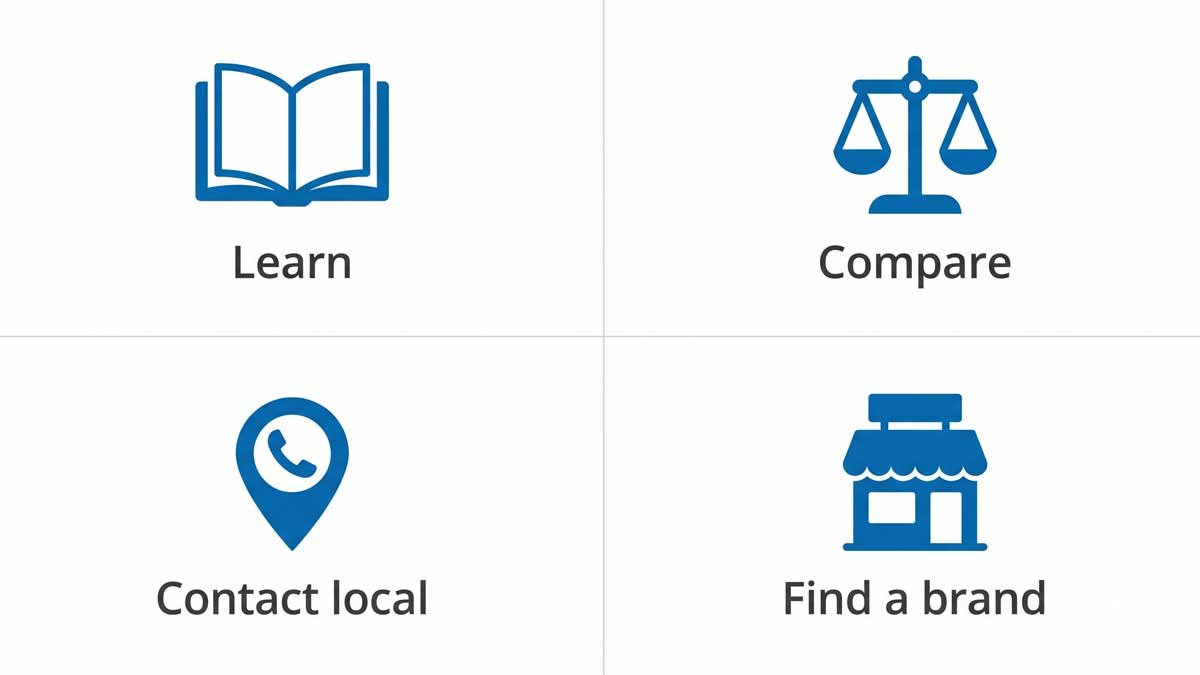
Search intent is the underlying reason a person types a specific query into Google, whether they want information, want to compare providers or prices, want to take action locally, or want a particular brand. For funeral directors, matching the right content format to each intent separates a site that generates enquiries from a site that only collects occasional visits.
Informational intent means the searcher wants to learn. Example: “what to do when someone dies” at 5,400 UK monthly searches (DataForSEO, September 2026). Your response should be a comprehensive guide with short sections, plain headings, and clear next steps. Commercial investigation intent means the searcher is comparing. Example: “how much does a funeral cost” at 2,400 UK monthly searches and keyword difficulty 7. Your response should be transparent pricing, itemised explanations, and reassurance about disbursements.
Transactional intent means the searcher is ready to contact someone local. Example: “funeral directors near me” at around 9,900 UK monthly searches. Your response is a strong homepage or hub page, fast contact paths, and a fully optimised Google Business Profile, because the Local Pack dominates many of these SERPs. Navigational intent means the searcher already has a destination in mind, such as a named firm. Your response is a clear brand presentation, correct opening hours, and easy phone access.
Most funeral home websites lean heavily on transactional pages, a homepage, services list, contact. They under-invest in informational and commercial content. That gap pushes families toward national comparison brands during the very stages where a local director could earn trust. Intent mapping fixes the imbalance. For page-level craft once you know your targets, the guide to on-page SEO for funeral homes shows how to translate keywords into titles, headings, and structured content.
What are the highest-value transactional and commercial keywords for funeral directors?
The highest-value funeral keywords for independent funeral directors combine transactional or commercial investigation intent with meaningful UK volume and realistic keyword difficulty. These are the terms where someone is choosing a provider, comparing prices, or moving from research to contact.
Cost per click (CPC) data from Google Ads shows what advertisers pay for a single click. High CPC signals commercial value. When you rank organically for the same phrase, you earn that traffic without paying per click, which is why SEO and keyword strategy matter financially, not only technically.
| Keyword (UK) | Monthly volume | Keyword difficulty | CPC (£) | Why it matters |
|---|---|---|---|---|
| “funeral directors near me” | 9,900 | 30 | 17.50 | Primary at-need phrase; Local Pack led |
| “direct cremation near me” | 1,000 | 7 | 13.78 | Service-specific local demand |
| “funeral arrangements” | 1,000 | 24 | 14.34 | Active arrangement language |
| “cremation services” | 1,300 | 20 | 20.43 | High CPC service term |
| “funeral services near me” | 720 | 30 | 19.29 | Broad service catch-all |
| “funeral planning near me” | 720 | 55 | 17.98 | Pre-need growth cluster |
| “prepaid funeral plan” | 1,000 | 25 | 17.90 | Regulated planning intent |
Funeral directors near me illustrates the split between organic difficulty scores and Local Pack reality. Even where keyword difficulty is moderate, Map Pack rankings depend on proximity, reviews, category accuracy, and citation consistency, not only on-page copy. Strong transactional SEO still requires a website that confirms services and area coverage in language families recognise, alongside a complete and accurate Google Business Profile.
How do families search for funeral costs and pricing online?
Funeral cost searches collectively generate more than 9,000 UK searches per month across the main head terms, yet many independent funeral home websites still publish no useful price detail. Families searching “how much does a funeral cost”, with a keyword difficulty of only 7, often land on national guides or aggregators rather than a local firm that could actually help (DataForSEO, September 2026).
The Competition and Markets Authority funeral sector order introduced a UK expectation that firms publish clear, comparable pricing [3]. That requirement aligns with SEO reality. A dedicated pricing or funeral costs explained page gives you somewhere to send commercial-intent traffic, earns trust, and reduces friction for families who are frightened of surprise bills.
Prioritise plain structure. Separate professional fees from third-party costs where possible, explain what moves the total up or down, and avoid burying the lead behind vague marketing copy. Pair the page with internal links to service-specific pages so someone who lands on price can understand what each option includes.
Cheapest funeral attracts 880 UK monthly searches, cheap funeral directors attracts 70, and burial cost attracts 210 (DataForSEO, September 2026). These phrases can feel uncomfortable, but they reflect genuine anxiety. Address them directly and compassionately on the same pricing hub, or you concede that traffic entirely. Pricing content works best when it sits inside a broader, honest local presence, including reviews and consistent citations that match your published fees.
What are ‘near me’ keywords and how do they drive enquiries for funeral homes?
Near me funeral searches combine high intent with geography. The searcher is not researching abstract theory. They want someone who can respond today. Funeral directors near me receives around 9,900 UK monthly searches, and live SERPs are served heavily through Google’s Local Pack, the map-led trio of businesses above many traditional organic results (DataForSEO, September 2026).

DataForSEO historical SERP snapshots from January to April 2026 place the Local Pack in positions one to three for “funeral directors near me”, with a People Also Ask module typically appearing around position four or six. That layout means your Business Profile, reviews, and service categories are part of keyword strategy, not a separate hobby.
Other near-pattern terms worth mapping include funeral home near me at 4,400 UK monthly searches, funeral homes near me at 4,400, cremation near me at 8,100, direct cremation near me at 1,000, funeral services near me at 720, woodland burial near me at 880, and funeral planning near me at 720 (DataForSEO, September 2026). Cremation near me is the largest of these after funeral directors near me, which reinforces the need for a strong cremation service page alongside your homepage.
You should not stuff “near me” into awkward sentences. Google infers location from device signals, your verified address, and consistent citations. Focus instead on truthful service area copy, town-level pages where appropriate, and Google Business Profile fields that match how you describe services internally.
What are long-tail keywords and why are they gold for independent funeral directors?
Long-tail keywords are search phrases, usually three or more words, that target a specific question or situation. They often carry lower monthly volume than head terms, but they also carry clearer intent, lighter competition, and a better fit for independent firms that can speak credibly about local options.
Examples from UK data illustrate the opportunity. How long does it take to arrange a funeral attracts 480 monthly searches. What does a funeral director do attracts 320 with keyword difficulty 3. Independent funeral director attracts 390 with keyword difficulty 7. Woodland burial near me attracts 880 with keyword difficulty 24. Humanist funeral attracts 1,600 with keyword difficulty 0 (DataForSEO, September 2026). These are realistic targets for firms willing to publish specific, accurate pages.

Long-tails also align with how AI tools answer questions. Perplexity, ChatGPT, and Google AI Overviews favour passages that answer a precise question in natural language. Broad service blurbs rarely get cited. Short, factual paragraphs under clear question headings perform better.
Independent funeral directors should note audience data here. Professionals who follow digital marketing in the sector over-index on Perplexity by roughly 28.2% compared with UK web users generally, and on Bing by roughly 8.3% (SparkToro audience research [2], March 2026). Those platforms surface answers from structured, citable pages. Long-tail content is how you become the source.
What are conversational and NLP keywords and why do they matter for AI search visibility?
NLP keywords, in this context, are the full-sentence questions people ask assistants and AI tools, rather than the shortened phrases they might type into a search box. As more discovery happens through Google AI Overviews, Perplexity, ChatGPT, and Gemini, pages that answer real questions verbatim become easier to retrieve and cite.
Voice search on phones and smart speakers follows the same pattern. People say, “How much does a funeral cost in the UK?” not “funeral cost uk” in a robotic monotone. Your headings and FAQ entries should reflect spoken grammar where it still reads well on the page.
| Traditional typed-style keyword | Conversational / NLP equivalent families actually ask |
|---|---|
| “funeral director cost” | “How much does a funeral director charge in the UK?” |
| “direct cremation” | “What is direct cremation and is it cheaper than a traditional funeral?” |
| “woodland burial near me” | “Where can I arrange a woodland burial near me?” |
| “humanist funeral” | “What happens at a humanist funeral?” |
| “funeral arrangements” | “How do I arrange a funeral step by step?” |
Practical implementation is straightforward. Phrase H2 headings as questions where natural. Open sections with a short, direct answer in plain English. Keep paragraphs to three or four sentences. Publish a visible FAQ block with matching FAQPage schema, which is the same pattern this article uses on-page. Google’s AI Overviews, Perplexity, ChatGPT, and Gemini all favour extractable, question-led structure over generic marketing blurbs.
Which funeral service keywords are growing in 2026 and what does that tell you?
Search volume trends show demand shifting before it shows up in every local market conversation. The 2026 data is more mixed than headlines suggest: pre-need planning searches are rising sharply, obituary searches are growing, cremation demand is holding steady at a high level, and some newer or niche terms have cooled.

Aquamation near me is still a niche search in the UK, at around 10 searches a month and down about 50% year-on-year. Alkaline hydrolysis is not widely available in the UK yet and regulation remains a work in progress. A short factual explainer is enough for now; demand does not yet justify more.
Humanist funeral holds 1,600 UK monthly searches, down about 19% year-on-year, with a keyword difficulty of 0 (DataForSEO, September 2026). Demand is lower than last year, but solid volume with almost no ranking competition still makes a dedicated page worthwhile if you offer the service. Cremation near me holds steady at around 8,100 UK monthly searches, which confirms cremation service copy should be as prominent as generic funeral director language.
Celebration of life remains stable at 1,600 UK monthly searches. Funeral obituary has grown about 23% year-on-year to 320 searches, which supports investment in obituary and tribute tooling on your site. Funeral planning near me has grown about 85% year-on-year, to 720 searches, amid broader FCA-driven research into prepaid plans (DataForSEO, September 2026).
Trend work should feed your editorial calendar, not just vanity metrics. Publishing early, while difficulty is lower, is usually cheaper than waiting until every competitor has the same page. AI-heavy SERPs reinforce the point, because first high-quality pages often become citation defaults when models look for a clear answer.
How do you build a keyword map for your funeral home website?
A keyword map is the document that assigns each target keyword to a specific page on your funeral home website. It ensures every URL has one primary intent, one primary phrase, and a short list of supporting terms, so you do not accidentally make two pages fight for the same query.
Principles worth following:
- One primary keyword per page. If two URLs target the same primary phrase, Google must choose between them, which weakens both.
- One major service per URL. Replace a single long Services page with focused pages for direct cremation, traditional funeral, humanist services, woodland burial, repatriation if relevant, and prepaid planning if you offer it.
- Town or coverage area pages for each place you truly serve, with unique detail, not duplicate fluff.
- Informational guides for early-funnel queries such as what to do when someone dies, stored in a blog or advice hub but linked prominently from navigation.
- FAQ or questions pages that mirror People Also Ask items you see in SERPs, supported by FAQPage schema.
Model keyword map for an independent funeral director
| Page | Primary keyword | Secondary keywords | Intent stage | Content type |
|---|---|---|---|---|
| Homepage / hub | Branded + “funeral directors [town]” | Core services, years established | Transactional / navigational | Trust-led overview, fast contact |
| Traditional funeral | “funeral arrangements” | Order of service, viewing, procession | Transactional | Service detail, pricing links |
| Direct cremation | “direct cremation” | Unattended cremation, attended direct cremation | Commercial / transactional | Packages, what is included |
| Funeral costs | “how much does a funeral cost” | Disbursements, professional fees | Commercial | Transparent pricing tables |
| Humanist funeral | “humanist funeral” | Non-religious ceremony, celebrant | Informational / commercial | Explainer, process, FAQs |
| Celebration of life | “celebration of life” | Personalisation, venues | Commercial | Examples, options, contact |
| Woodland / green burial | “woodland burial near me” | Green burial, eco funeral | Transactional | Site options, practical detail |
| After someone dies guide | “what to do when someone dies” | Register a death, timelines | Informational | Step-by-step guide |
| Town page | “funeral directors [town]” | Local landmarks, coverage | Transactional | Unique local copy |
| FAQ | People Also Ask queries | Variants of how, what, can I | Mixed | Structured Q&A, schema |
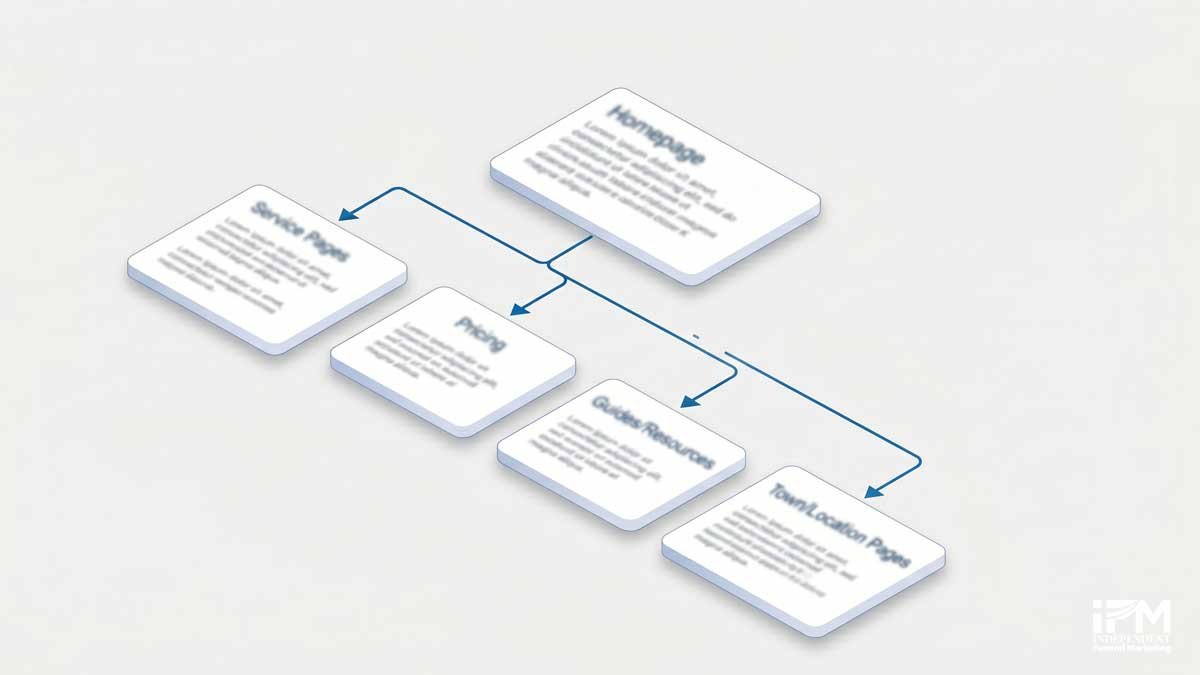
Town-level pages are a core part of how independent firms scale visibility without sounding national. They belong alongside technical hygiene covered in technical SEO for funeral home websites, because thin duplicate location pages hurt more than they help.
How do you do keyword research for a funeral home step by step?
Keyword research for a funeral home follows a six-step process: list your services as seed terms, measure volume and difficulty, study live SERPs and People Also Ask, review competitors, expand with autocomplete and related searches, then group everything by intent and assign phrases to URLs. Free tools cover most of the workflow.
- List seed keywords from real services. Write down everything you offer: attended funeral, direct cremation, repatriation, prepaid plans, memorials, woodland burial, and any specialist faith or humanist work. Seeds should reflect your business, not a generic industry list.
- Check volume and keyword difficulty. Use Google Keyword Planner with a UK geography setting and Google Search Console for phrases you already rank for. Note monthly volume bands and difficulty scores if available.
- Mine People Also Ask. Search your core phrases in a private browser window, expand relevant questions, and record wording exactly as Google shows it. Each question is a potential FAQ entry or H2 on a service page.
- Inspect SERP layout. For “funeral directors near me” and “funeral directors [your town]”, note which firms own the Local Pack, which directories dominate organic slots, and which content formats appear, video, guides, comparisons. Your page plan should reflect what Google already rewards.
- Expand with autocomplete and related searches. Scroll to the bottom of results for related queries and note helpful modifiers such as cost, local, simple, or humanist. Capture long-tail variants you can answer honestly.
- Group by intent and assign to pages. Sort phrases into informational, commercial, transactional, and navigational buckets, then map each to a single primary URL. Update your site map spreadsheet whenever you add services or towns.
Once your spreadsheet is complete, treat it as a living brief for writers and web developers. Execution covers internal links, schema, and page speed as much as phrase choice, which is why technical checks belong in the same project plan.
Which keyword research tools should funeral directors use?
Funeral directors can conduct effective keyword research using free Google tools first, then layer optional paid software if budget allows. Google Search Console and Google Keyword Planner, introduced in the step-by-step section above, remain the essential baseline for impression data and volume ranges.

Autocomplete and People Also Ask remain under-used despite costing nothing. They reflect live language from users in your market. Ubersuggest offers a friendly interface for quick difficulty estimates on limited daily checks. AnswerThePublic visualises question permutations around a seed term, which helps when you build conversational headings.
Google Trends confirms whether interest is rising or falling, which matters for terms such as aquamation or humanist funerals. Google Analytics 4 does not show pre-click query data in most setups, but it shows which landing pages already earn traffic, which is a useful sense check after you publish.
Paid platforms such as Ahrefs and Semrush add competitor gap analysis, rank tracking, and historical SERP features. They are sensible if you run an ongoing SEO programme or work with an agency, but they are not required to act on the priorities in this guide.
What are the most common keyword research mistakes funeral directors make?
The most common keyword research mistake is targeting only broad, high-competition terms such as “funeral home” while ignoring long-tail and informational queries that reach families earlier. A strategy limited to transactional head terms competes in the most crowded auctions, both in ads and organic SERPs, without building the trust assets that help conversion.
- Chasing fat-head vanity terms. Funeral home records a keyword difficulty of 46 in the UK (DataForSEO, September 2026). A modest independent site will struggle unless layered with exceptional authority. Town-led and service-led phrases usually convert better.
- Using one catch-all Services page. A single page cannot be the best answer for direct cremation, humanist funerals, woodland burial, and prepaid plans simultaneously. Split services into dedicated URLs.
- Avoiding pricing language. How much does a funeral cost is not a cynical query. It is a frightened one. Refusing to speak about cost cedes that traffic to aggregators.
- Skipping post-death practical content. What to do when someone dies and register a death each earn 5,400 UK monthly searches (DataForSEO, September 2026). Absence here means absence from the earliest, most emotional stage.
- Treating every near me phrase as identical. Cremation near me, direct cremation near me, and woodland burial near me have different volumes and service implications. Map them to different pages where you genuinely offer the service.
- Ignoring People Also Ask. Those questions are literally labelled by Google as related user searches. If your site answers none of them, you leave easy long-tail gains on the table.
- Doing one keyword project and never revisiting. Volumes shift. Humanist funeral searches fell about 19% in a year while funeral planning near me rose about 85%. Annual reviews keep your map honest (DataForSEO, September 2026).
If you recognise more than one of these issues, treat the fix as a structured project: rebuild the map, assign owners, and align content deadlines with realistic capacity.
Frequently asked questions: keyword research for funeral directors
What is keyword research and why does it matter for funeral directors?
Keyword research is the process of discovering the exact search terms families use when they look for funeral services, prices, and guidance online. For funeral directors, it turns guesswork into a content plan: you see which pages to build, which questions to answer, and which phrases belong in titles and headings. The term funeral directors near me alone receives around 9,900 UK searches per month (DataForSEO, September 2026), which shows how much demand sits behind a small set of phrases.
How many people search for funeral directors online each month in the UK?
The highest-volume phrases show sustained demand. Funeral directors near me receives around 9,900 UK monthly searches, cremation near me receives around 8,100, and funeral home near me receives around 4,400 (DataForSEO, September 2026). Taken together, the leading funeral-related head terms generate more than 50,000 UK searches per month, which means families are researching online at scale, not as a niche behaviour.
What are the best keywords for a funeral home website?
The best mix covers every intent stage. Transactional terms such as funeral directors near me and cremation near me capture at-need contact intent. Commercial terms such as how much does a funeral cost and direct cremation support comparison. Informational terms such as what to do when someone dies and register a death build trust early. Long-tail terms such as humanist funeral (1,600 UK monthly searches, keyword difficulty 0) and woodland burial near me add achievable visibility for specific services (DataForSEO, September 2026).
What is the most searched funeral keyword in the UK?
Funeral director is the most searched, at 12,100 UK monthly searches, followed by funeral directors near me and funeral plan at around 9,900 each (DataForSEO, September 2026). These phrases are led by the Google Local Pack in live SERPs, so rankings depend on Google Business Profile strength and local relevance as much as on website copy.
Should funeral directors target ‘near me’ keywords?
Yes, but the tactic is structural rather than literal. Near me queries signal geographic intent, and Google maps that intent to your service area and Business Profile. You do not need to stuff the words near me into every paragraph. You do need a complete Google Business Profile, accurate categories, reviews, and location pages for the towns you serve. DataForSEO historical SERP snapshots from January to April 2026 show the Local Pack in positions one to three for funeral directors near me.
What is the difference between short-tail and long-tail keywords for funeral homes?
Short-tail keywords are broad phrases such as funeral director, with high volume and stronger competition. Long-tail keywords are more specific, often three or more words, with lower volume but clearer intent and usually lower keyword difficulty. Examples include how long does it take to arrange a funeral (480 UK monthly searches) and what does a funeral director do (320 UK monthly searches, keyword difficulty 3) (DataForSEO, September 2026). Long-tails suit independent firms that can answer niche questions authentically.
What is search intent and why does it matter for funeral home SEO?
Search intent is the reason behind a query: whether someone wants information, wants to compare options, wants to act, or wants a specific brand. The same family may move from informational searches after a death to commercial pricing searches, then to transactional near me searches. If your site only targets one stage, you hand the other stages to national comparison sites or chains. Matching page types to intent is what turns traffic into enquiries.
What tools can I use to do keyword research for my funeral home?
Start with free Google tools: Google Search Console shows what you already rank for, and Google Keyword Planner gives volume ranges tied to Ads data. Google Search autocomplete and the People Also Ask box surface real questions. Ubersuggest and AnswerThePublic help expand question-based lists. Google Trends validates growth or decline. Paid suites such as Ahrefs and Semrush add competitor and tracking depth. Most independent funeral homes can complete core research without a paid subscription.
How do I find out what families search when they are not ready to contact a funeral director yet?
Study informational intent queries in the hours after a bereavement. What to do when someone dies receives 5,400 UK monthly searches, register a death receives 5,400, and how long does it take to arrange a funeral receives 480 (DataForSEO, September 2026). These families are not choosing a funeral director yet, but they are online and under pressure. A clear, compassionate guide on your site earns trust before the transactional search happens.
What keyword difficulty score should an independent funeral home aim for?
If your site is new or lightly optimised, prioritise keyword difficulty roughly 0 to 25 on DataForSEO-style scales. That band still includes valuable terms: humanist funeral (keyword difficulty 0), what does a funeral director do (3), how much does a funeral cost (7), independent funeral director (7), and woodland burial near me (24), all with meaningful UK volume (DataForSEO, September 2026). You can layer harder terms once pages earn authority.
How does Google decide which funeral home to show in search results?
Organic blue-link rankings weigh relevance, content quality, authority, and technical health. The Local Pack uses a separate logic built around proximity, Google Business Profile completeness, reviews, categories, and citations. Keyword research feeds both systems because it tells you what to put on each page, but transactional near me visibility still depends heavily on local signals. You need a joined-up website and local presence, not one in isolation.
Should I create separate pages for each funeral service I offer?
Yes. One primary keyword per page avoids internal competition, often called keyword cannibalism. A single Services page rarely earns strong rankings for direct cremation, humanist funerals, woodland burial, and prepaid plans at the same time. Dedicated pages let you match intent, add specific FAQs, and earn links and citations to focused URLs. Each page should have one clear primary term and a short list of supporting phrases.
What funeral keywords are growing in search volume in 2026?
Funeral planning near me has grown roughly 85% year-on-year in the UK, to 720 monthly searches. Funeral obituary has grown roughly 23% year-on-year, and independent funeral directors near me roughly 50%. Cremation near me is holding steady at around 8,100 monthly searches. Not everything is rising: humanist funeral is down about 19% year-on-year, though it still holds 1,600 monthly searches with almost no ranking competition (DataForSEO, September 2026). Publishing accurate pages now captures demand before competition tightens.
Is keyword research a one-time task or an ongoing activity?
Treat it as ongoing maintenance. Audit keyword targets at least once a year, or quarterly if you operate multiple branches or invest heavily in content. Refresh immediately after you change services, pricing structure, trading name, or service area. Search trends shift as cremation preference grows and as new options attract curiosity. A living keyword map prevents your site from drifting out of step with how families actually search.
How do funeral keywords differ in the UK compared to the United States?
UK search language centres on funeral director, while US queries more often use funeral home. UK volumes are smaller in absolute terms but often show lower keyword difficulty, which helps independent firms gain traction. UK-specific modifiers include funeral costs UK, prepaid funeral plan, and direct cremation near me. Always set your research tools to United Kingdom and use spellings and regulatory references your audience recognises, including CMA transparency expectations on pricing content.
If you want this research translated into a prioritised content roadmap and technical implementation, SEO for independent funeral directors is the next step, including support to turn keyword lists into published pages and measurement.
References
[1] DataForSEO Labs API, keyword overview, search volume and keyword difficulty data, United Kingdom, September 2026 (historical SERP snapshots January to April 2026), dataforseo.com
[2] SparkToro audience research, UK funeral-sector professional over-index on Perplexity and Bing, March 2026, sparktoro.com
[3] Competition and Markets Authority, Funerals Market Investigation Order 2021, UK Government, gov.uk